
A customer can enjoy one post from your business and still have no interest in the next twenty. That is the problem a publishing calendar often hides: consistent output does not necessarily create consistent relevance.
Facebook’s new recommendation controls make that tension worth examining. Meta’s 13 October 2026 announcement describes ways for people to state what they want in Feed and Reels. For marketing teams, the practical question is how to produce work an identifiable audience would actively choose.
This article separates the confirmed product change from a proposed operating framework. The framework below is an editorial and measurement recommendation, not a disclosed Facebook ranking formula. There is no promised reach increase, and a short test cannot isolate the effect of a platform rollout.
What Facebook Your Algorithm changes
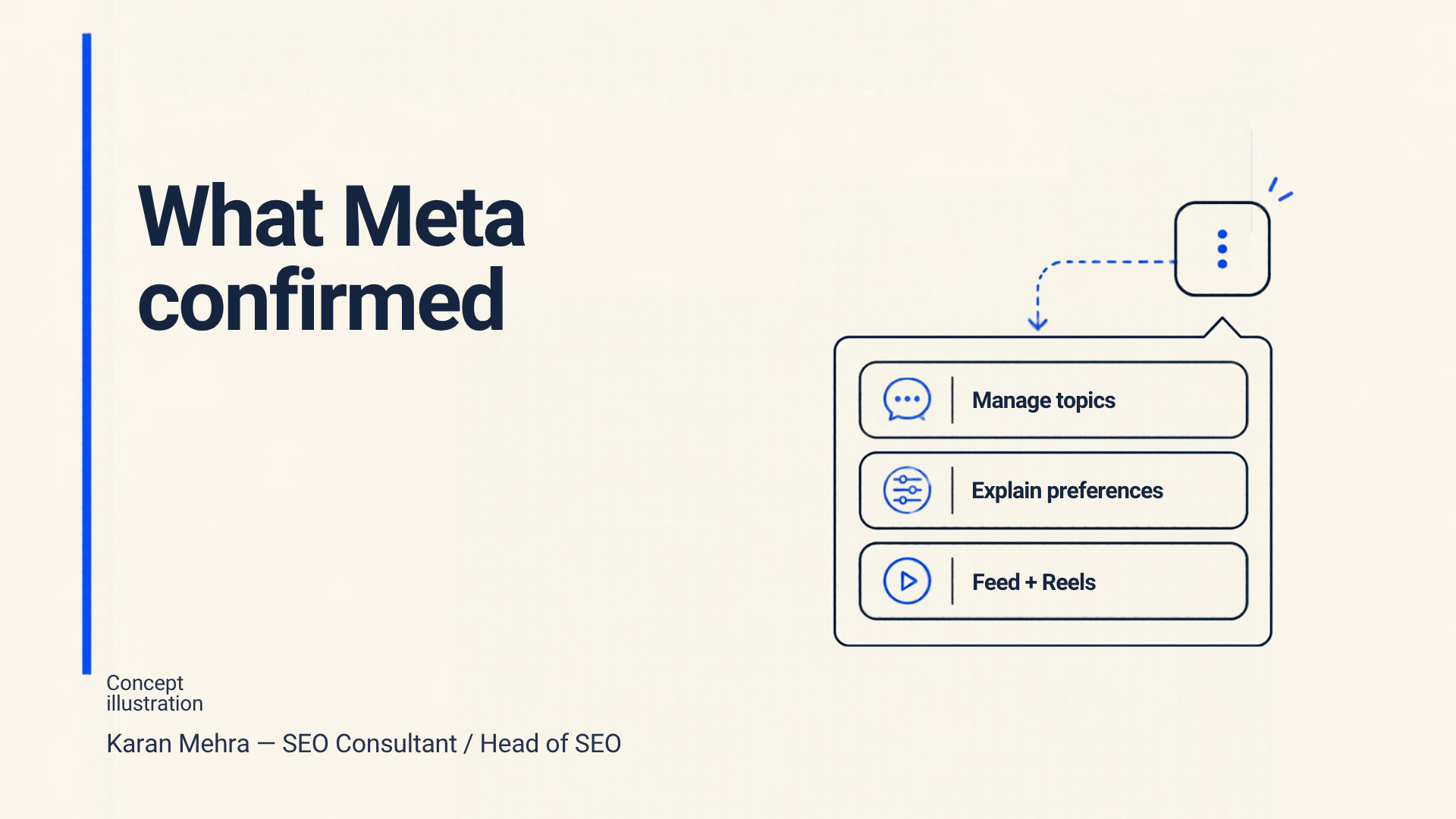
According to Meta’s announcement, users can manage desired topics through Your Algorithm in the three-dot menu. They can also provide written detail after selecting Interested or Not interested on posts. These controls apply to Feed and Reels.
Meta says language models interpret written preferences alongside existing signals, with recommendations adapting within the same session. The announcement does not disclose signal weights, country-level availability or a guaranteed distribution benefit for businesses. Check availability in the relevant account rather than assuming every customer already has the controls.
The commercial interpretation is straightforward: write a content brief that makes its intended audience and usefulness explicit. That is our recommendation, not a new platform requirement.
What the announcement does not justify
Do not rename ordinary keyword research “algorithm prompting” and sell it as a guaranteed distribution shortcut. There is no documented instruction brands can place in a caption to command recommendation systems. Similarly, encouraging a user to select a topic is not proof that your Page will receive exposure.
Keep paid and organic decisions separate. This announcement describes recommendation controls, not a new Ads Manager targeting product. It does not establish that a campaign’s budget, audience, bid strategy or conversion tracking needs changing. Review paid performance against its own objectives and reporting.
The more useful response is to improve how your team defines content relevance, then observe whether the new work produces better audience and business outcomes.
For help connecting an editorial calendar with business goals, explore PRM Digital’s social media marketing services.
Build a content brief around one audience and one job
Broad briefs create broad posts. “Make an engaging real estate Reel” leaves the writer, designer and reviewer guessing what matters. A tighter brief might be: “Help a first-time apartment buyer understand which maintenance costs to ask about before booking a site visit.”
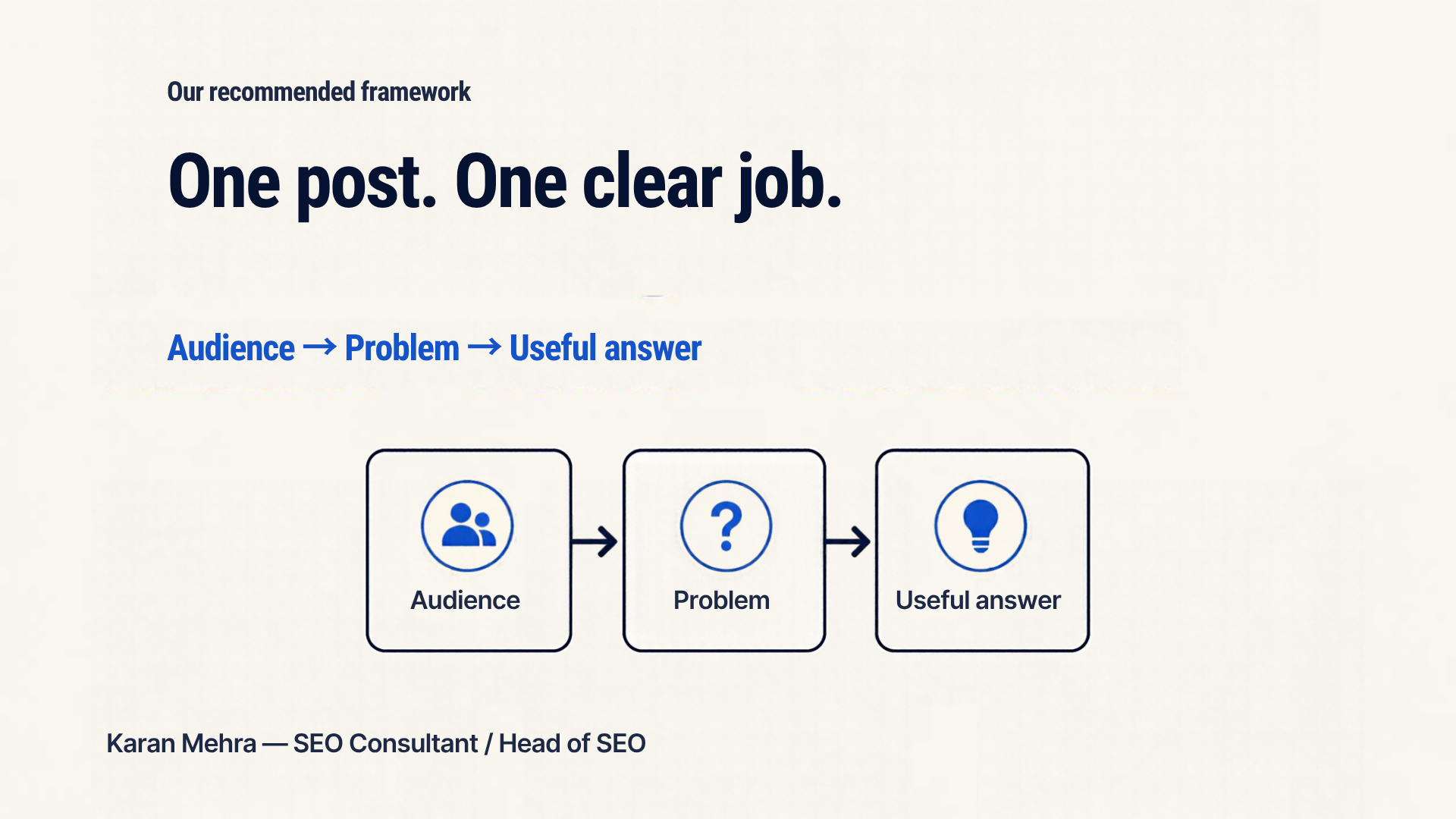
Use four fields for each proposed post:
- Audience: Identify a recognisable person and situation, not only an age range.
- Problem: Record the question, friction or decision the person faces.
- Useful answer: Specify what the post helps them understand or do.
- Next action: Choose one fitting response, such as saving a checklist, reading a guide or requesting an appointment.
This creates a reviewable standard. A post can be attractive yet fail the brief if its answer is vague or its next action is unrelated. The reviewer should be able to explain the value in one sentence without repeating the headline.
Example: a local home-services business
Consider a company installing air conditioners. “Summer offer available” communicates a promotion, but offers little independent value. A useful post could show three installation questions homeowners should ask: where drainage will run, whether the electrical circuit is suitable and what the quoted installation includes.
Use footage from an authorised installation, show the actual decision and explain it accurately. Avoid technical instructions that encourage unsafe DIY electrical work. The next action can be requesting a professional site assessment.
This is an illustrative content treatment, not a client case study or a claim about measured results. Its advantage is that the customer need, creative evidence and commercial action fit together.
Example: a B2B agency
A generic “AI will change marketing” post gives an agency little to demonstrate. A stronger treatment shows an anonymised workflow failure: an automated draft was delivered, but no one checked the source, approved the claim or verified publication.
The agency can illustrate the handoffs and offer a short review checklist. It should remove client identifiers and use a hypothetical example when permission is unavailable. Useful operational detail gives the audience a reason to save or share the work without manufacturing a performance claim.
Want a practical review of your next ten content briefs? WhatsApp +91 98036 18014.
Make originality a production requirement
The new controls sit alongside existing expectations for content quality. In its March 2026 originality guidance, Meta distinguishes creator-produced work and substantial new contributions from duplicative posts or minor edits to other people’s material. A border, caption or speed change alone does not create substantial originality.
For a business, that suggests a practical production standard: show your own process, explain a decision with your own expertise, or build a genuinely useful original illustration. Keep records of footage ownership and permissions. A licensed stock clip may be legally usable without demonstrating your business’s expertise; these are separate considerations.
Before approving a post, ask what new value your team contributes. Is it a clear explanation, a first-hand demonstration, a relevant comparison or an answer to an actual customer question? If the contribution is only a new wrapper around a copied idea, improve the substance before spending more time on the wrapper.
Use a 14-day test to improve the work
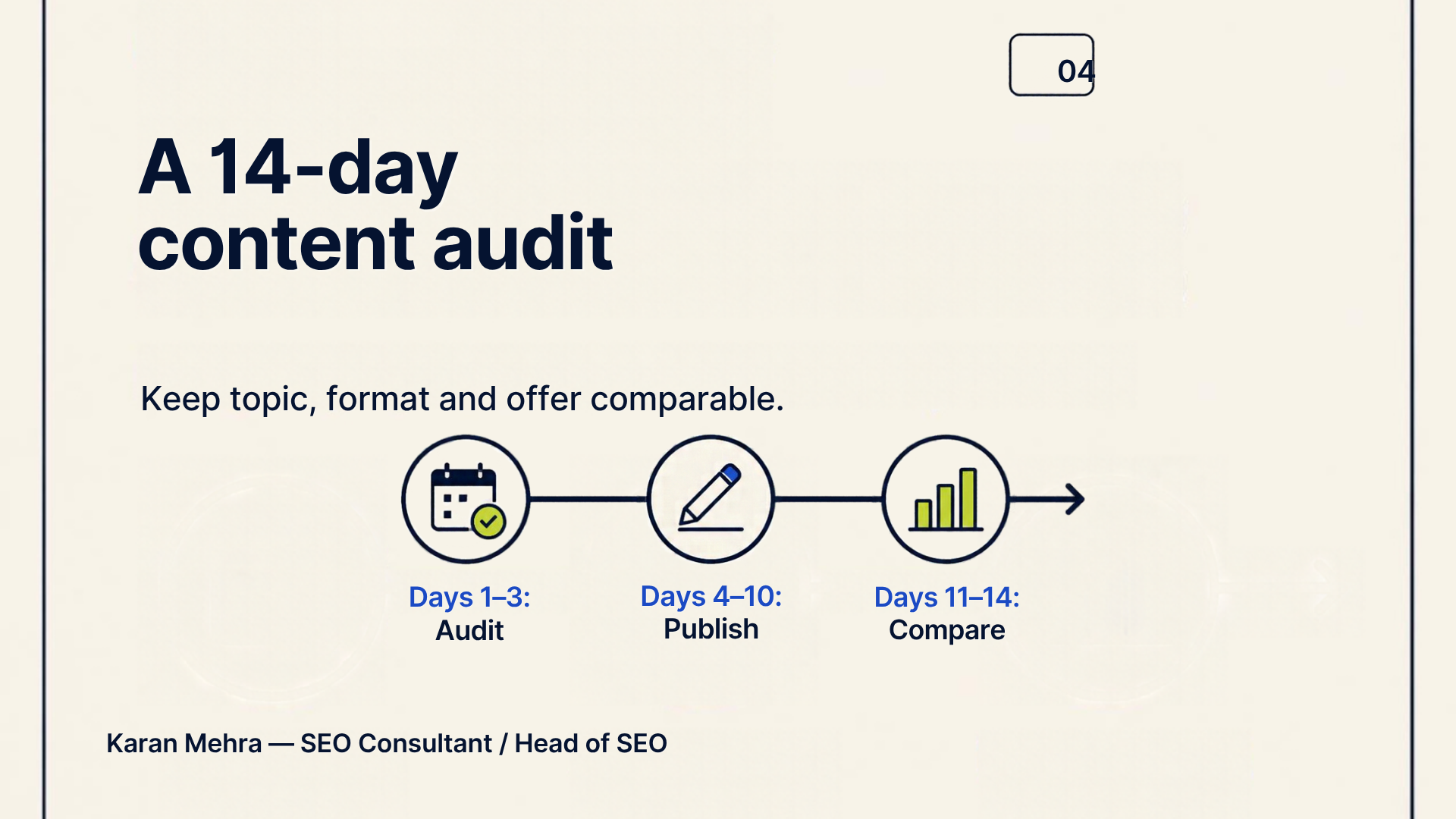
The following plan is a proposed agency framework. It tests your content decisions under current conditions. It is not an experiment that proves the new recommendation controls caused a result.
Days 1–3: audit and prepare
Review a manageable recent sample, such as the last twenty organic posts, using available account data. Record the audience, topic, format, creative treatment, intended action and whether paid distribution contributed. Mark missing data as missing rather than estimating it.
Group posts into a few meaningful audience needs. Look for work that attracted useful replies or enquiries, not just high impressions. Read comments and sales questions to identify wording customers actually use. Remove personal information from shared worksheets.
Choose two audience problems you can answer credibly. For each, prepare comparable treatments with a clear hook and a useful explanation. Set the review window and decision rules in advance so the team cannot change its definition of success after seeing the results.
Days 4–10: publish comparable treatments
Publish at a sustainable cadence. Keep the offer and intended audience consistent when comparing hooks or structures. If several variables change together, describe the result as a comparison of whole treatments rather than a test of one element.
Maintain a simple production log: post URL, date, format, audience problem, creative version, destination and any unusual context. Note holidays, boosted distribution, influencer mentions or service outages that could distort the comparison.
Where available, use native testing features. Meta’s 2023 creator testing announcement described Reels caption and thumbnail tests and expanded professional-dashboard insights. It is historical context, not assurance of current access; confirm the tools and metrics in your account before designing the test around them.
Days 11–14: compare and decide
Review each post after a comparable observation period. A post published yesterday should not be compared directly with one that has accumulated responses for two weeks. Use medians across comparable posts where possible, while retaining individual results so an outlier does not disappear.
Choose one of three decisions: retain the treatment, revise a specific weakness, or stop investing in it for now. Document the reason in terms of the original brief. Low reach alone may not invalidate a useful treatment if it produced qualified actions; equally, high reach does not rescue irrelevant enquiries.
If your team needs help choosing the test and defining qualified responses, message +91 98036 18014 on WhatsApp.
Measure three layers of performance
An executive report needs a connection between attention and outcomes. Use three layers, with definitions appropriate to the format and the data your account exposes.
1. Distribution
Record reach and, where available, follower versus non-follower distribution. For video, inspect retention using the platform’s definitions. Do not treat plays, unique people and completed views as interchangeable. Separate paid support from organic exposure.
2. Audience usefulness
Track saves, shares and substantive replies where available. For a consistent reach-based comparison, calculate saves per 1,000 people reached as saves divided by reach, multiplied by 1,000. Use the same denominator and time window across posts. If reach is zero or unavailable, leave the rate blank.
These responses can suggest usefulness, but they do not prove purchase intent. A popular educational post can attract people outside your service market. Read a sample of relevant comments and enquiries to understand who responded and why.
3. Business actions
Use campaign-tagged destinations, site analytics and a simple enquiry-source field. For example, a post link can use utm_source=facebook, utm_medium=organic_social and a consistent campaign name. Test that the destination loads and tracking survives redirects before publishing.
Classify enquiries using agreed criteria, such as service fit, location and a real stated need. Log booked appointments or accepted opportunities separately. These records are more useful than a combined “engagement” total that mixes reactions with sales conversations.
Attribution has limits: people can read a post and contact you through another channel, privacy controls can reduce observable data, and self-reported sources are imperfect. Report those limits alongside the numbers rather than claiming every conversion was caused by a particular post.
Build the creative so its value is visible
Professional layout supports comprehension. Use a clear headline, a short explanation and one relevant illustration. A workflow needs a readable flow; a comparison needs comparable panels; a checklist needs a hierarchy people can scan on a phone.
For square social layouts, preserve safe margins, align related elements and shorten copy before shrinking text. Keep labels away from arrows and avoid placing footer branding on top of the illustration. Inspect full-resolution exports and a mobile-sized preview, especially after resizing.
The visual should explain something the copy alone takes longer to convey. Decorative icons do not compensate for an unclear idea. Nor does an overcrowded slide become more persuasive because it contains more information.
To build a consistent production and measurement process, work with PRM Digital’s social media team.
Frequently asked questions
Can a brand prompt Facebook to recommend its posts?
There is no published brand-side command in this announcement. Treat content clarity as a creative practice, not an undocumented ranking instruction.
Should we change our Facebook ad budget because of this update?
The announcement does not establish a reason to do so. Assess advertising using campaign results, tracking quality and business objectives.
What if Your Algorithm is not visible in our account?
Record that limitation and check the relevant app and account. The content audit can still proceed because it evaluates work and outcomes without requiring access to a personal preference control.
Does a 14-day test prove an algorithm change improved our reach?
No. It can guide editorial decisions, but a small observational comparison cannot isolate the rollout from creative quality, audience variation, timing and other factors.
What should a small team do first?
Choose one real customer question, create an original useful answer and agree on the response that would make the post successful. Expand the process only after that basic loop works.
For a focused content audit, contact Karan Mehra on WhatsApp at +91 98036 18014.
Written by Karan Mehra. Reviewed 14 October 2026. Product facts are attributed to Meta; examples, measurement recommendations and the 14-day plan are proposed editorial frameworks. No client results or reach forecasts are presented.


Leave a Reply