
Digital marketing analysis · 18 October 2026
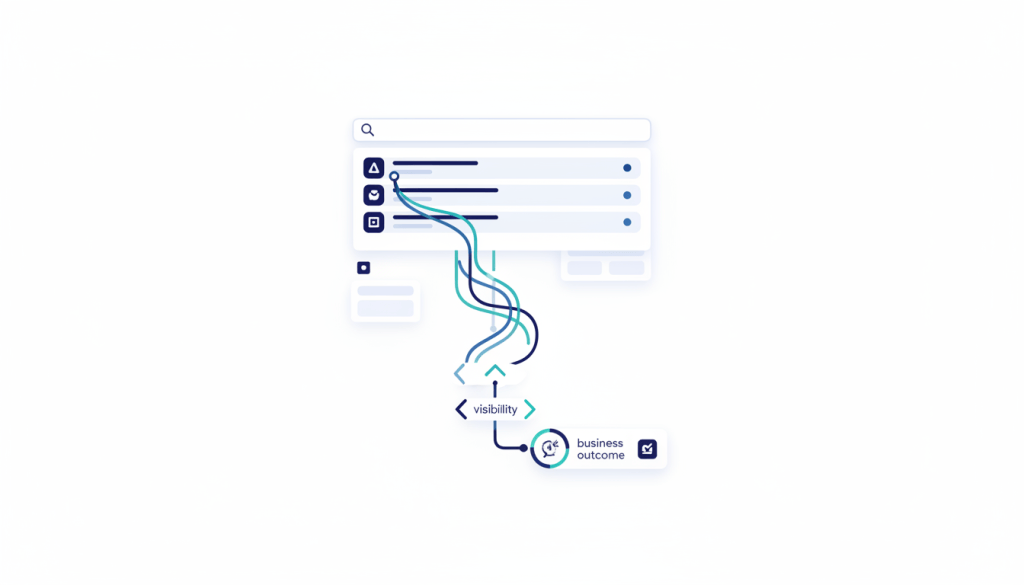
Google says it is making source links easier to find inside AI Mode and AI Overviews. The practical response is not to chase a new “AI ranking trick”; it is to make your pages genuinely useful, then measure whether the new presentation changes the path from discovery to a business outcome.
The short version
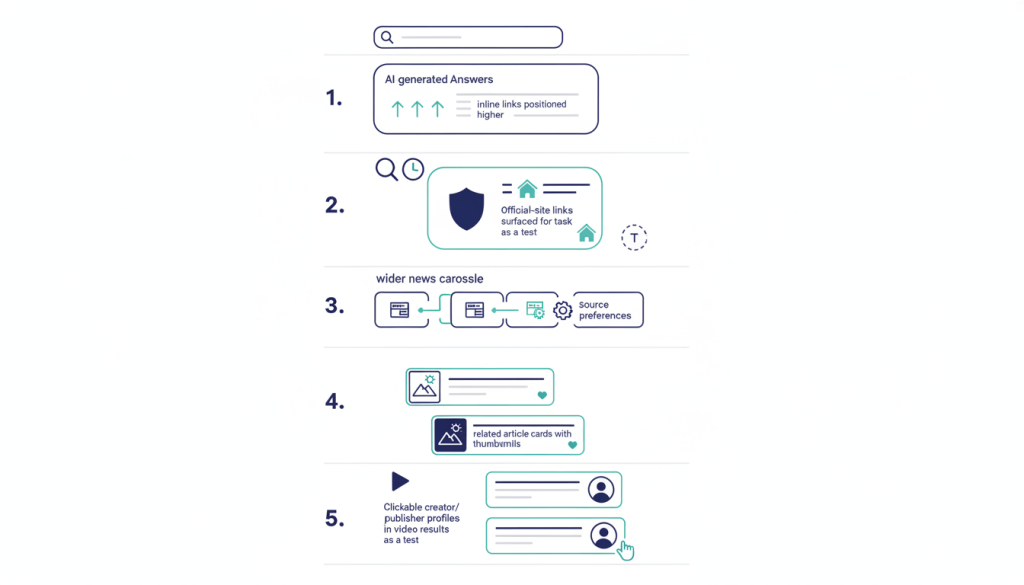
On 15 October 2026, Google announced updates across AI Mode and AI Overviews: inline links are being surfaced higher in responses more often; a dedicated official-site section is being tested for some task-oriented queries; news carousels are expanding; related-article links are getting more visual treatment; and publisher or creator names in some video results are being tested as links to Search profiles. These changes are intended to help people explore sources, not to guarantee that a specific site will receive more visits. Read the official Google announcement before making decisions based on third-party summaries.
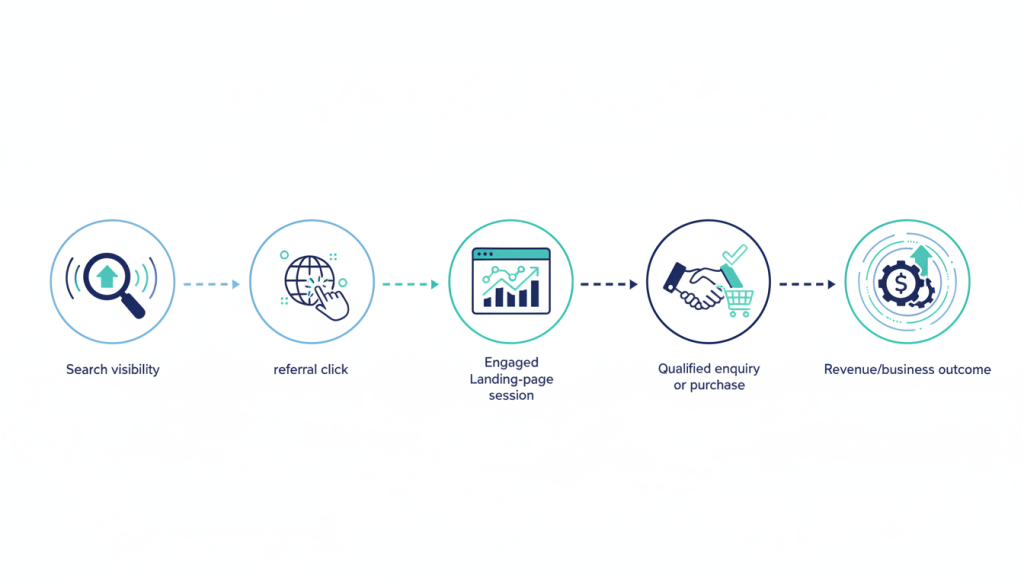
For marketers, the right question is: does our useful content become easier to discover, and does that discovery lead to qualified visits, enquiries or sales? That requires a measurement plan spanning Search Console, analytics, CRM and conversion tracking—not a screenshot-only audit of AI answers.
If your team needs help connecting search visibility with content, social distribution, paid media and analytics, PRM Digital’s full-service digital marketing team can help map the work to commercial goals.
What Google actually announced
The announcement describes five types of changes, with different rollout statuses. It is important not to present every item as a universal, fully launched feature.
1. Inline links can appear higher in AI answers
Google says it has increased inline links in its AI experiences and is updating their placement so useful sources are more often visible higher in a response. That could reduce the effort needed for a searcher to inspect a supporting source. It does not mean a link will appear for every query, nor does it establish that a publisher’s click-through rate will rise.
2. A dedicated section for official websites is being tested
For some queries where there are only one or two official destinations that can complete a task, Google says it will test a prominent section with context explaining why each link is useful. For brands, this is a reminder that a page must be the right destination—not merely a page that repeats the topic. Make the next step obvious: booking, pricing, documentation, product specifications, eligibility or contact, depending on the intent.
3. News and related links are becoming more visual
Google says news carousels are expanding to more places and languages and can highlight Preferred Sources. Related-article links may receive stronger visual treatment, including thumbnails. This makes accurate titles, distinctive editorial imagery and a clear page purpose more useful to people evaluating a link. It is not evidence that adding a thumbnail alone improves rankings.
4. Some creator and publisher names may become clickable
Google is testing clickable creator and publisher names in certain video results in AI Mode, linking to Search profiles. The practical implication is broader than SEO: consistent authorship, a recognisable brand and a coherent body of original work can help users understand who is behind a result. Do not assume this test applies to every market or query.
What this means for organic, paid and social teams
The interface change sits inside a larger customer journey. A prospect may see a brand mentioned in an AI answer, click a source, watch a supporting video, return later through branded search, and eventually convert through a paid campaign or direct visit. If each team reports only its own last-click metric, the organisation may miss the combined effect—or over-credit a channel.
- SEO and content: publish pages that answer a specific question with useful detail, clear sourcing, accurate claims and a logical next step.
- Analytics: preserve clean landing-page and campaign tracking, annotate changes, and compare like-for-like periods.
- Paid media: check that the landing page promised by an ad is the page a user actually needs; do not change budgets because an AI-search screenshot looks promising.
- Social and video: use short explainers to help people understand the same topic in the format they prefer, then link to a genuinely useful destination.
- CRM and sales: capture lead quality and revenue, not just raw form submissions, so marketing can distinguish attention from commercial impact.
Google’s earlier website-owner controls and insights announcement describes Search Console insights for pages appearing in generative AI experiences. Check the current reporting available in your own property before defining a baseline; reporting coverage and labels can evolve. Google’s guidance on generative AI content also remains clear that the goal is helpful, reliable, people-first content—not content created primarily to manipulate visibility.
For a cross-channel plan that ties search, content, paid campaigns and conversion measurement together, PRM Digital can help your team build a practical measurement and optimisation roadmap.
How to measure the change without fooling yourself
1. Define a small, stable query set
Choose 20–50 commercially important queries across informational, comparison and action-oriented intent. Include branded and non-branded queries where relevant. Record the exact query, target page, country, device and the business outcome the page is supposed to support. This is a practical sample for manual observation, not a statistically representative measure of all AI Search.
2. Capture the baseline before changing pages
For each query, record whether an AI answer appears, whether your domain is mentioned or linked, which URL is shown, and what the competing sources are. Take dated screenshots and note the search location, language, device and time. AI experiences can vary; a single screenshot should never be presented as a universal ranking report.
3. Separate visibility from visits
Use Search Console for available search impressions, clicks, query and page trends. Use GA4 to assess landing-page sessions, engagement and key events. Use CRM data to qualify leads and connect opportunities to revenue. Keep the limits of each system visible: an impression is not a click, a session is not a qualified lead, and a lead is not revenue.
4. Annotate changes and compare fair periods
Record when content, title tags, internal links, schema, campaign tracking or landing pages change. Compare matched periods and account for seasonality, paid spend, promotions, brand campaigns and tracking changes. Do not attribute every movement after 15 October to Google’s interface update; multiple variables can change at once.
5. Look for business outcomes, not vanity wins
Review qualified enquiries, product views, add-to-cart events, purchases, sales acceptance and revenue where available. If exposure rises but useful visits do not, improve the page’s relevance and the value of the destination. If visits rise but conversion quality falls, examine intent mismatch, UX and offer clarity before producing more content.
Need a second set of eyes on your search-to-conversion measurement? Discuss your setup on WhatsApp: +91 98036 18014.
A 30-day action plan
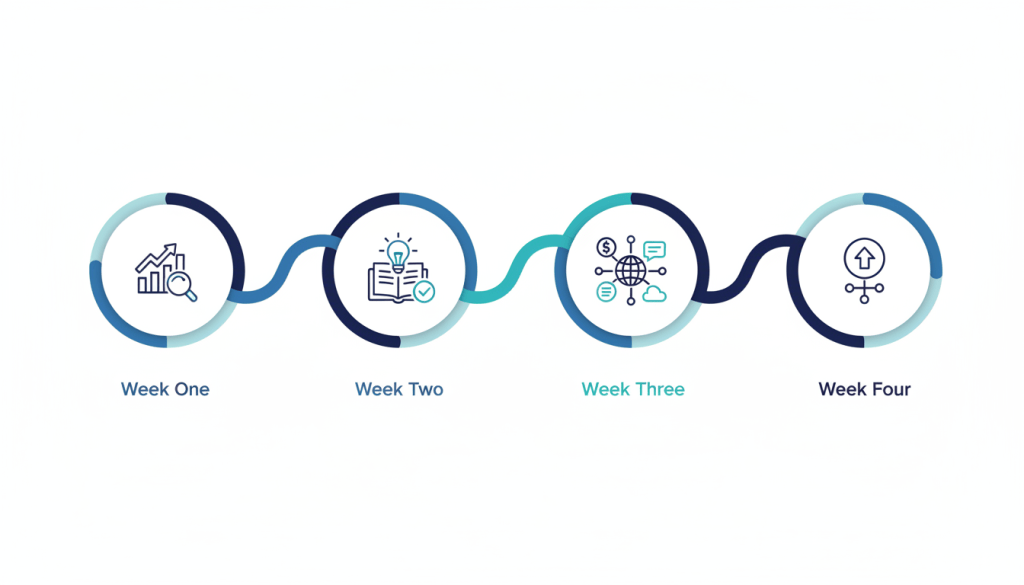
Week 1: Baseline and instrument
- Choose priority queries and target URLs.
- Audit Search Console, GA4, CRM and conversion-event definitions.
- Check that important landing pages return the intended content and that canonical tags, indexability and internal links are sensible.
- Save dated observations of AI answers and source links where visible.
Week 2: Improve the source, not just the snippet
- Make the answer to the page’s main question easy to find.
- Add original examples, first-hand experience, relevant evidence and clear author or organisation details.
- Ensure the page’s title, description, headings and structured data accurately describe the visible content.
- Remove unsupported claims and update stale facts.
Week 3: Connect content to the rest of the funnel
- Repurpose a useful explanation into a short video or social carousel without changing the underlying facts.
- Strengthen internal links from discovery pages to decision pages.
- Check that paid campaigns and social posts land on the right page and carry reliable campaign parameters.
- Give sales or support teams a simple way to record lead quality and recurring questions.
Week 4: Evaluate and decide
- Compare the baseline with current query, page, visit and conversion data.
- Review qualitative observations alongside analytics, not instead of them.
- Keep changes that improve usefulness and business outcomes; revise or stop work that only creates activity.
- Document limitations and set the next review date.
Use this as a measured test, not a promise of immediate gains. The correct response may be to leave a strong page alone while improving measurement elsewhere.
Common mistakes to avoid
- Claiming that more links guarantee more clicks. Google has described interface changes, not a guaranteed publisher traffic uplift.
- Rewriting every page at once. Without a baseline and change log, it becomes difficult to learn what helped.
- Optimising for a screenshot. AI answers vary by query, context and rollout; a single observation is weak evidence.
- Publishing generic AI copy at scale. Volume is not a substitute for original expertise, accuracy or usefulness.
- Ignoring the rest of marketing. A discovery improvement is commercially valuable only if the next step, tracking and follow-up work.
FAQs
Does the Google AI Search link update mean my website will get more traffic?
No. Google says links are being surfaced higher more often and describes several related changes, but it does not promise a traffic increase for every site. Measure actual visits and outcomes.
Will Search Console show exactly which AI answer generated every click?
Do not assume it will. Use the reports and dimensions currently available in your property, document their limitations and supplement them with analytics and CRM data where appropriate.
Should I rewrite content to appear in AI Overviews?
Start with usefulness, accuracy, clear structure, relevant evidence and a strong match to search intent. Avoid rewriting solely to imitate an AI answer or adding unsupported claims.
Does structured data guarantee a source link in AI Mode?
No. Structured data should accurately describe visible content and follow Google’s documentation. It is not a guarantee that a page will be cited or displayed in a particular AI Search feature.
How soon should I assess performance?
Set a baseline now and review at a consistent cadence, but avoid drawing strong conclusions from a few days of data. Consider rollout differences, seasonality, paid activity and other site changes.
For a practical review of your content, analytics and conversion journey, start a conversation on WhatsApp: +91 98036 18014.
Sources and further reading
- Google: More ways to connect with the web from Search (15 October 2026).
- Google: New opportunities, control and insights for website owners (3 June 2026; updated 31 August 2026).
- Google Search Central: Using generative AI content on your website.
- Search Engine Journal: Google puts inline links higher in more AI Search responses (15 October 2026).
- Search Engine Land: Google updates AI Mode and AI Overviews with more links, context, carousels and creator information (15 October 2026).
- The Verge: Google is making inline links more prominent in AI responses (October 2026).
Editorial note: Google’s announcement is the primary source for product changes. This article separates those documented changes from the measurement recommendations, which are operational advice rather than claims about ranking factors.
Talk through a cross-channel implementation plan on WhatsApp: +91 98036 18014.


Leave a Reply